
Cancer treatment can place significant stress on the body. Chemotherapy and radiotherapy are designed to damage or destroy cancer cells, but they can also affect healthy cells, particularly cells that divide rapidly.
This can lead to changes in blood counts, immune function and the body’s ability to recover after intensive treatment. In selected patients, stem-cell-based treatment may form part of the medical strategy used to restore blood formation or support recovery.
Two types of stem cells often discussed in regenerative medicine are Mesenchymal Stem Cells (MSCs) and Hematopoietic Stem Cells (HSCs). They have different biological functions and should not be considered interchangeable.
Mesenchymal Stem Cells and Tissue Repair
Mesenchymal Stem Cells, commonly called MSCs, are multipotent cells that can be isolated from several tissues, including umbilical cord tissue.
MSCs are widely studied for their role in tissue repair, inflammation, and immune regulation. Rather than acting as a direct cancer treatment, their potential medical value comes mainly from the biological signals they produce and their interaction with surrounding tissues.
These cells may support repair processes in damaged tissue and influence inflammatory responses. For this reason, MSCs are being investigated across areas such as orthopaedics, degenerative conditions, immune-related disorders and tissue injury.
Many MSC applications remain under clinical investigation. Their role in patients with cancer requires particular care because cancer biology is complex, and treatments that influence tissue growth or immune responses need to be assessed in the context of the patient’s specific disease.
MSC therapy should therefore be considered only after review by doctors familiar with the patient’s diagnosis, treatment history, and current condition.
Hematopoietic Stem Cells in Cancer Treatment
Hematopoietic Stem Cells, or HSCs, have a different function.
HSCs are the stem cells responsible for producing the body’s blood cells. They develop into red blood cells, white blood cells, and platelets. These cells can be collected from peripheral blood, bone marrow or umbilical cord blood.
Their role in cancer treatment is well established for selected cancers, particularly cancers affecting the blood and bone marrow.
According to the US National Cancer Institute, stem cell transplants are most commonly used for conditions such as leukaemia, lymphoma, multiple myeloma and myelodysplastic syndromes.
In most cases, HSC transplantation does not destroy cancer cells directly. Instead, it allows doctors to use intensive chemotherapy, and sometimes radiotherapy, that may severely damage the patient’s existing blood-forming cells. Healthy hematopoietic stem cells are then introduced to rebuild the blood-forming system.
Once administered, the cells travel through the bloodstream to the bone marrow, where they begin producing new blood cells.
This process is known as haematopoietic stem cell transplantation, or HSCT.
Can HSCs Help Fight Cancer Directly?
There is one important exception to the primarily restorative role of HSC transplantation.
In some allogeneic stem cell transplants, where the stem cells come from a donor, immune cells originating from the donor can recognise and attack cancer cells that remain in the patient’s body.
This is known as the graft-versus-tumour effect, or graft-versus-leukaemia effect in patients with leukaemia.
This immune response can contribute to the effectiveness of transplantation in certain blood cancers.
It is different from saying that the hematopoietic stem cells themselves contain substances that automatically identify and destroy cancer cells. The anti-cancer effect involves a complex interaction between the transplanted blood-forming system, donor-derived immune cells, and the patient’s cancer.
Umbilical Cord Tissue and Umbilical Cord Blood
The distinction between MSCs and HSCs is also important when discussing umbilical cord sources.
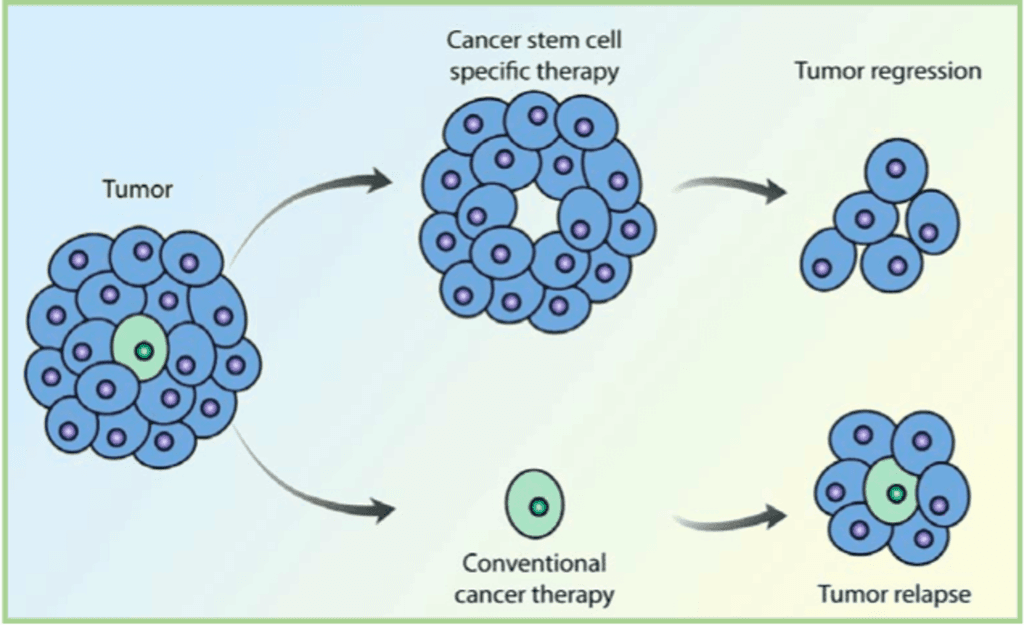
Umbilical cord tissue can be used as a source of Mesenchymal Stem Cells.
Umbilical cord blood, the blood remaining within the umbilical cord and placenta following birth, contains Hematopoietic Stem Cells.
Cord blood is recognised as one possible source of blood-forming stem cells for transplantation. Other sources include bone marrow and stem cells collected from peripheral blood.
The choice of stem cell source depends on the disease, transplant protocol, donor availability, cell matching and the patient’s overall medical condition.
MSC and HSC: Different Cells, Different Purposes
| Mesenchymal Stem Cells | Hematopoietic Stem Cells | |
|---|---|---|
| Common abbreviation | MSC | HSC |
| Possible umbilical cord source | Umbilical cord tissue | Umbilical cord blood |
| Primary biological role | Tissue signalling, repair and immune regulation | Production of blood and immune cells |
| Cancer treatment role | Mainly investigational and supportive research | Established for selected cancers through HSCT |
| Common cancer applications | No general established anti-cancer indication | Mainly leukaemia, lymphoma, multiple myeloma and related blood disorders |
| Direct anti-cancer effect | Not an established mechanism | Possible indirectly through graft-versus-tumour effects in selected donor transplants |
Understanding this distinction matters because the term stem cell therapy covers very different medical procedures.
A regenerative MSC treatment and a hematopoietic stem cell transplant have different objectives, clinical protocols, risks and patient-selection criteria.
Patient Selection Comes First
HSC transplantation is a major medical procedure. It is not suitable for every person diagnosed with cancer.
Doctors consider several factors before recommending treatment, including the type and stage of cancer, previous treatments, general health, availability of compatible donor cells, and the patient’s ability to tolerate intensive therapy.
Allogeneic transplantation also carries specific risks, including graft-versus-host disease, where immune cells from the donor attack healthy tissues in the recipient. Infection, bleeding, and prolonged immune suppression can also occur during recovery.
For this reason, stem cell treatment for a cancer patient begins with a detailed medical assessment rather than a standard dose or protocol.
Stem Cell Processing at Regeneratia
Regeneratia states that its stem cells are developed through the Celltech Stem Cells Center and that its processing uses Quantum technology with a Closed System. The clinic describes this approach as a method designed to maintain controlled cell handling and reduce exposure during processing.
For cancer patients, laboratory processing is only one part of treatment planning.
The medical team must first review the patient’s cancer diagnosis, pathology, previous chemotherapy or radiotherapy, blood results, current medication, and overall health. Additional investigations may be required before any stem-cell-based procedure can be considered.
The appropriate cell type also depends on the clinical objective. MSCs and HSCs cannot be substituted for one another because they perform different biological functions.
A Medical Decision Based on the Individual Patient
Stem cell medicine has an established role in the treatment of several blood cancers, particularly through hematopoietic stem cell transplantation. Other applications, including many uses of MSCs, continue to be studied.
For cancer patients, the safest approach is to determine first what role stem cells could realistically play alongside established oncology care.
Patients considering treatment through Regeneratia should provide their complete medical records for specialist review. The medical team can then determine whether a stem-cell-based procedure has an appropriate clinical indication and what treatment protocol should be considered.
Medical note: This information is intended for patient education and does not replace consultation with an oncologist, haematologist or other qualified medical specialist. You can contact our specialist to get an extensive consultation.