
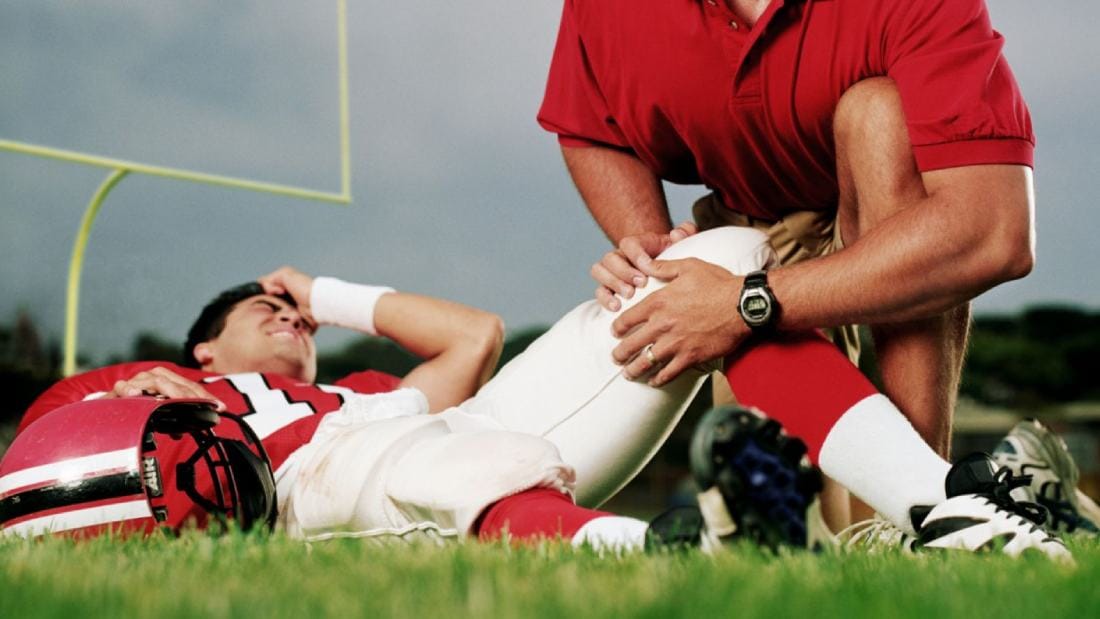
For athletes, a serious injury can interrupt training, competition, and everyday life. Ligament tears, tendon injuries, cartilage damage, and severe muscle injuries can take months to recover from. Some injuries also continue to cause pain or weakness long after the initial damage has healed.
The body has a natural repair process, but healing does not always restore tissue to its original structure. Some injuries heal with scar tissue, which may have different mechanical properties from healthy tendon, ligament, cartilage, or muscle.
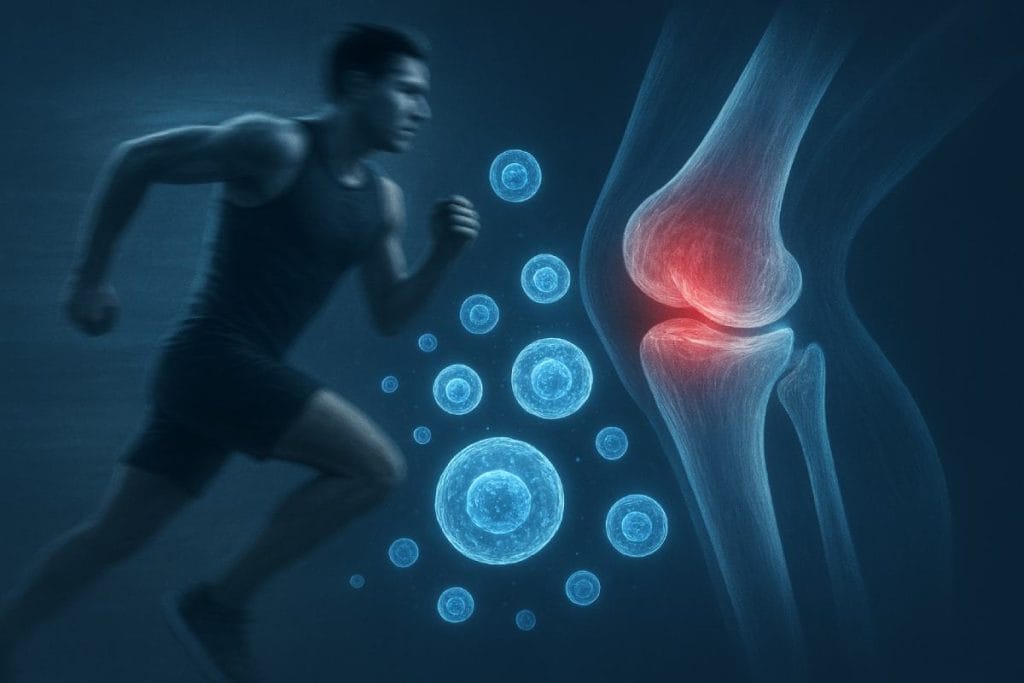
This has led researchers to explore regenerative medicine for sports and orthopaedic injuries. One area of interest is Umbilical Cord-Derived Mesenchymal Stem Cells (UC-MSCs), which are being studied for their potential to regulate inflammation and support the body’s natural tissue-repair processes.
Why Can Sports Injuries Be Difficult to Heal?
Many common sports injuries involve tissues that have limited blood supply or complex structures. This can make recovery slower and, in some cases, incomplete.
Ligament tears such as ACL injuries can require lengthy rehabilitation. Chronic tendon problems, including Achilles tendinopathy and rotator cuff injuries, can persist despite treatment. Cartilage is another challenge because it has limited natural healing capacity.
Inflammation is part of the body’s normal response to injury. It helps remove damaged material and begins the repair process. However, prolonged inflammation can continue to stress surrounding tissue and interfere with normal recovery.
The quality of the tissue formed during healing also matters. Scar tissue can help close an injury, but it may not have the same organisation, strength, or function as the original tissue.
Why Are UC-MSCs Being Studied for Injuries?
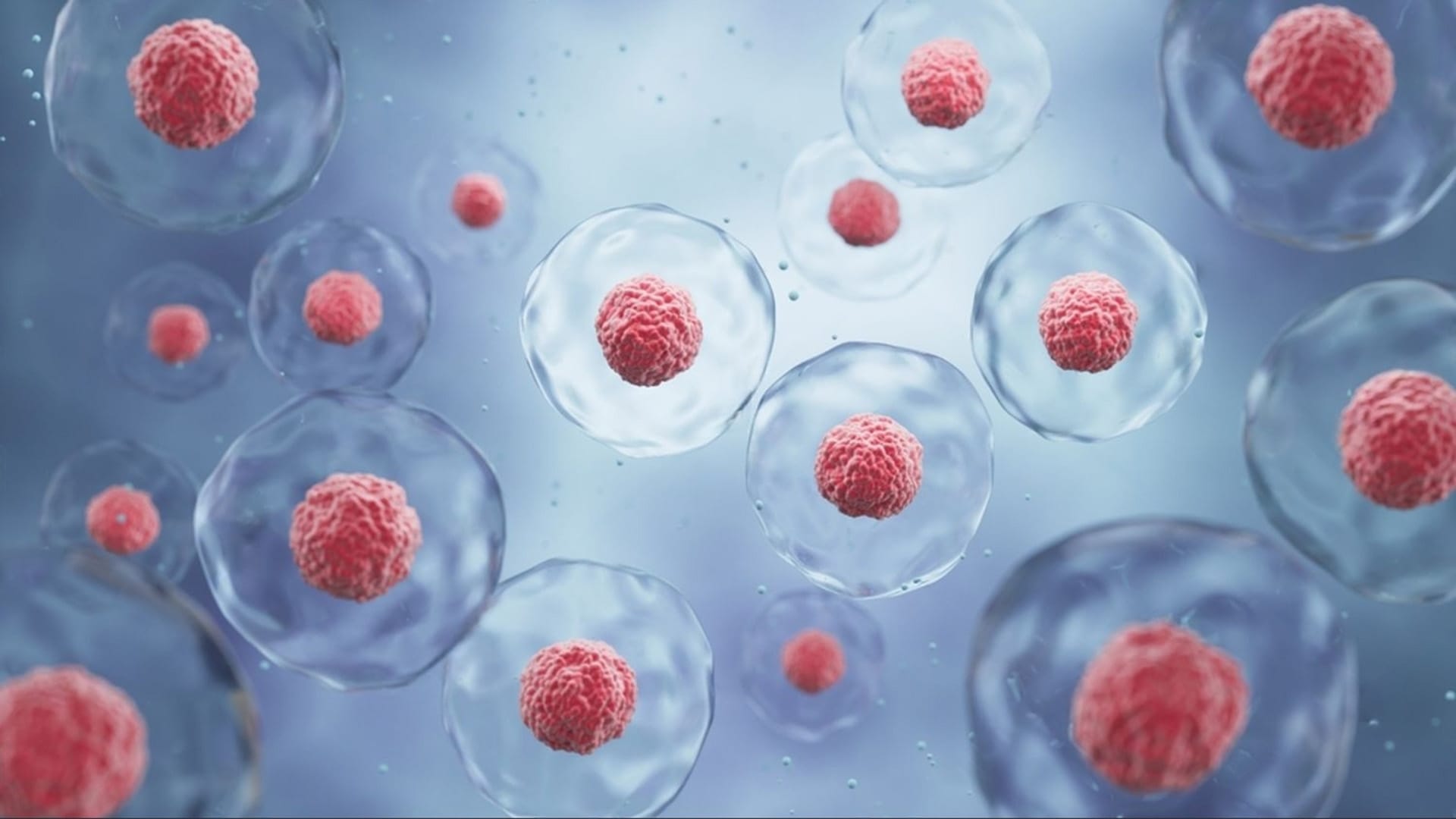
UC-MSCs are obtained from umbilical cord tissue, commonly from Wharton’s jelly, following birth and appropriate donor screening and consent.
Researchers are interested in these cells because they can produce a wide range of biological signals that interact with immune cells and surrounding tissue. Their potential role in injury recovery is therefore not limited to becoming replacement tissue.
UC-MSCs can also be prepared as an allogeneic cell source, meaning the cells come from a screened donor rather than being collected from the patient. However, the safety and suitability of any cell-based treatment depend on the specific product, manufacturing process, route of administration, and clinical protocol.
How Could UC-MSCs Support Tissue Repair?
Research into MSCs has identified several mechanisms that may be relevant to injured tissue.
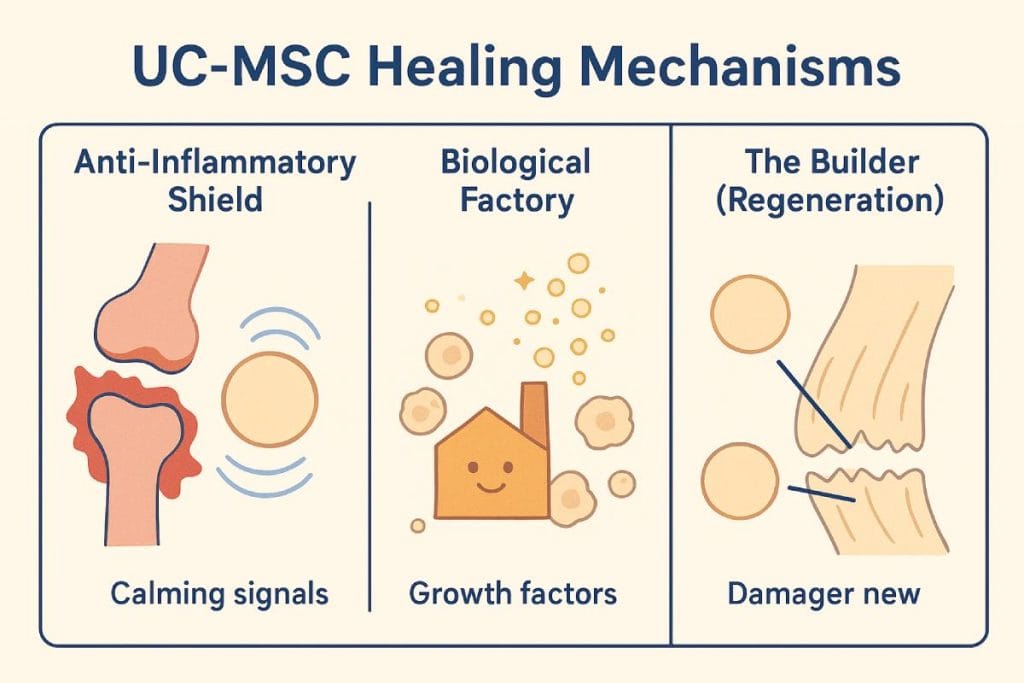
- Regulating inflammation: MSCs can interact with immune cells and release signalling molecules that influence inflammatory activity. Researchers are studying whether this immunomodulatory effect can help create a more favourable environment for tissue repair. Controlling excessive inflammation may be particularly relevant in chronic tendon and joint conditions, where ongoing inflammatory and degenerative processes can interfere with recovery.
- Supporting the body’s own repair processes: UC-MSCs release growth factors, extracellular vesicles, and other signalling molecules that can communicate with nearby cells. These signals may influence cell survival, migration, blood-vessel formation, and the production of extracellular matrix components such as collagen. Researchers are also investigating whether MSCs can contribute directly to tissue formation under certain conditions. However, the extent to which this occurs in human patients remains an area of research.
The overall concept is to support the biological environment around an injury so that the body’s existing repair mechanisms can function more effectively.
Where Could Stem Cell Therapy Be Relevant?
Cartilage and Joint Injuries
Cartilage has limited natural healing capacity because it lacks a direct blood supply. This is one reason cartilage defects and degenerative joint conditions can be difficult to manage.
Researchers are studying whether MSCs can influence inflammation within the joint and support cartilage-related repair processes. Early research has generated interest in conditions such as osteoarthritis and focal cartilage defects, but results vary between studies and treatment protocols.
Tendon and Ligament Injuries
Tendons and ligaments can take a long time to recover, particularly after significant tears or chronic degeneration.
MSC research in this area focuses on inflammation, collagen organisation, cell survival, and the overall structure of repaired tissue. Some studies have reported improvements in pain or function, but more controlled clinical research is needed to determine how reliably these treatments can improve healing.
Muscle Injuries
Muscle injuries usually heal through a combination of regeneration and scar formation. Extensive scar tissue can affect muscle flexibility and strength.
Researchers are studying whether MSCs may influence inflammation and the formation of fibrotic tissue while supporting muscle repair. This could potentially help improve the quality of recovery after significant muscle injuries.
What Does the Research Show?
Stem cell therapy for injuries has progressed from laboratory research into human clinical studies, particularly in areas such as osteoarthritis, cartilage injuries, and tendon conditions.
Some clinical studies have reported improvements in pain, function, or imaging findings following MSC treatment. However, results are not consistent across all studies. Differences in cell source, dose, preparation, injection method, patient characteristics, and rehabilitation protocols can all influence outcomes.
This means the evidence should be viewed carefully. UC-MSC therapy is a promising area of regenerative medicine research, but it should not be described as a guaranteed way to rebuild damaged tissue or prevent future injuries.
Where Does Stem Cell Therapy for Injuries Stand Today?
Stem cell therapy for sports and orthopaedic injuries remains an active area of clinical research. Scientists are continuing to investigate which injuries are most suitable, which cell sources provide the most useful biological effects, and how treatment should be combined with rehabilitation.
For athletes, the potential value goes beyond returning to competition quickly. The quality of tissue recovery, long-term joint health, strength, mobility, and the risk of future problems are also important considerations.
Regenerative medicine may eventually become a more established part of injury management, but further clinical evidence is needed to determine where UC-MSC therapy provides the greatest benefit.
A New Direction in Sports and Orthopaedic Medicine
A serious injury can affect much more than an athlete’s immediate performance. Poor healing can lead to persistent pain, reduced mobility, changes in movement patterns, and difficulties returning to previous levels of activity.
Research into UC-MSCs is exploring whether regenerative approaches can influence the biological processes involved in inflammation and tissue repair. The goal is to understand whether these treatments can support better recovery while preserving as much healthy tissue and function as possible.
The field is developing, and continued clinical research will help clarify which patients and injuries are most likely to benefit.
Considering Regenerative Therapy for an Injury
Anyone considering stem cell therapy should first have the injury properly diagnosed and assessed. The type of tissue involved, severity of the injury, time since the injury, previous treatment, imaging findings, and rehabilitation history can all affect the appropriate treatment approach.
A specialist can explain established treatment options and discuss whether a regenerative approach being studied for the specific injury may be appropriate.
Stem cell for injury treatments utilizing UC-MSCs represent the most advanced way to ensure that an athlete’s career is defined by their peak performance, not the lingering limitations of an old injury.
If you or an athlete you know is struggling with chronic or complex orthopedic injuries, consulting with our specialists is the crucial first step toward unlocking the power of this biological shortcut.