

Parkinson’s disease is a progressive neurological condition that affects movement and many other aspects of health. Common movement symptoms include tremor, stiffness, slowness and problems with balance. Sleep, mood, digestion, pain, thinking and energy can also be affected.
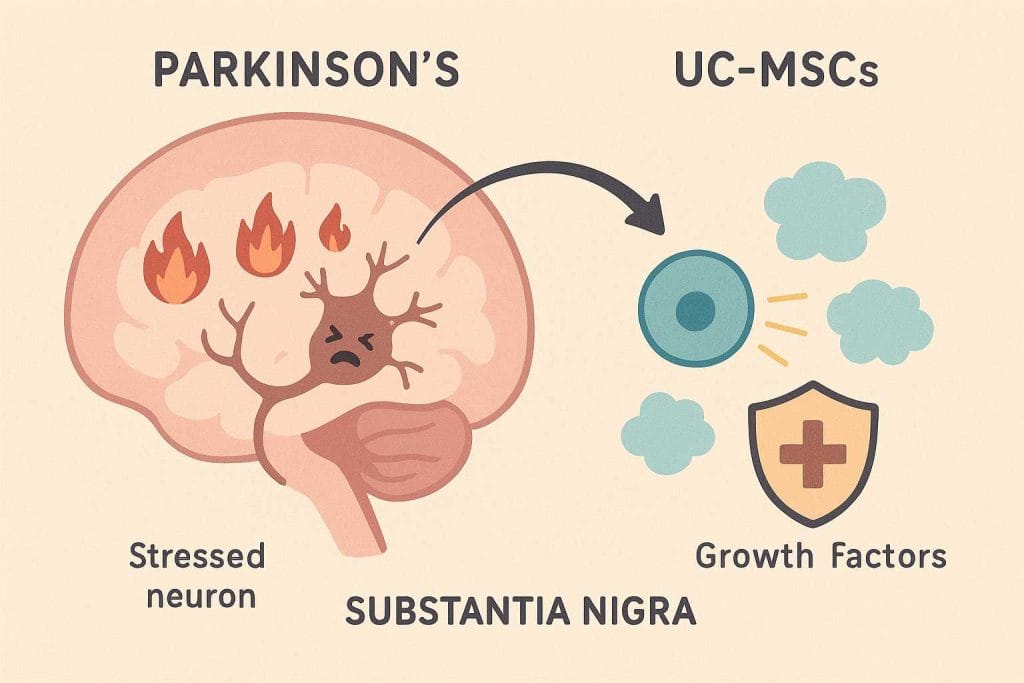
These symptoms develop as dopamine-producing neurons in a part of the brain called the substantia nigra become damaged and die. Medicines such as levodopa can replace some of the missing dopamine signal and often provide meaningful symptom relief. Exercise, physiotherapy and other forms of support help people maintain movement and independence.
Researchers are studying umbilical cord-derived mesenchymal stromal cells, commonly called UC-MSCs, for their potential to regulate inflammation and support vulnerable nerve cells. This work looks beyond dopamine replacement and asks whether the environment around surviving neurons can be improved.
Dopamine and Movement
Dopamine helps the brain select, begin and coordinate movement. Neurons in the substantia nigra produce dopamine and send it to connected areas involved in movement control.
Parkinson’s symptoms usually become noticeable after a substantial amount of this function has been lost. The condition involves more than dopamine, however. Changes in several brain networks contribute to its motor and non-motor effects.
Abnormal protein accumulation, mitochondrial stress, oxidative damage and immune activity have all been linked with the loss of neurons. These processes interact, which is one reason the condition progresses differently in each person.
The goals of care are to manage symptoms, preserve function and support long-term quality of life. Regenerative research adds another question: can biological support help protect the neurons that remain?
Why Researchers Study UC-MSCs
UC-MSCs are obtained from umbilical cord tissue donated with informed consent after a healthy birth. Collection does not involve an embryo or interfere with the delivery.
The cells can be expanded under controlled laboratory conditions. They release cytokines, growth factors and extracellular vesicles that may influence inflammation, cell survival and communication between tissues.
UC-MSCs tend to provoke a lower immune response than some other transplanted cells. This allows researchers to study cells from carefully screened donors. Manufacturing standards, sterility testing, cell identity and dose remain important parts of treatment quality.
The relative youth of UC-MSCs makes them practical to grow in the laboratory. Differences in processing can change how a cell product behaves, so results from one preparation cannot automatically be applied to another.
How UC-MSCs May Support the Nervous System
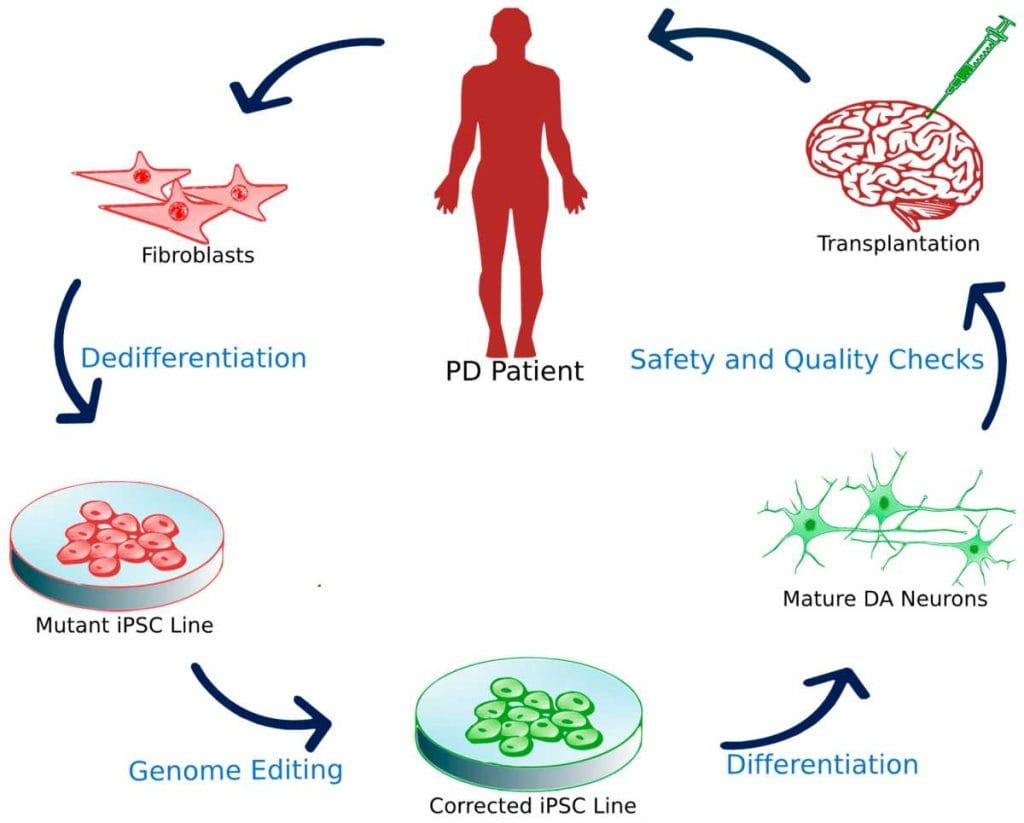
Research into UC-MSCs for Parkinson’s disease focuses mainly on immune regulation and neurotrophic support. It is different from cell-replacement research that aims to create new dopamine-producing neurons for surgical transplantation into the brain.
Regulating Neuroinflammation
Immune cells within the nervous system help protect and maintain brain tissue. In Parkinson’s disease, prolonged activation may contribute to an environment that places further stress on vulnerable neurons.
MSC-derived signals can influence inflammatory pathways and the behaviour of immune cells in laboratory studies. Researchers are examining whether this can create a more supportive environment for the dopamine-producing neurons that remain.
This process is known as immunomodulation. The clinical aim would be to regulate harmful inflammatory activity without removing the immune responses the body needs.
Providing Neurotrophic Support
UC-MSCs release factors associated with nerve-cell survival and growth. These include substances involved in cell protection, blood-vessel support and communication between neurons.
Laboratory studies suggest that these signals may help neurons manage oxidative and metabolic stress. They may also support synaptic connections, which allow nerve cells to communicate.
Protecting existing neurons could become a useful part of Parkinson’s care. Clinical trials must establish the strength and duration of this effect in people.
Delivery and Treatment Protocols
MSC studies have used different routes of administration, including intravenous infusion. An infusion avoids the brain surgery required for direct cell-replacement procedures.
After intravenous delivery, many cells are initially retained in organs such as the lungs. Researchers believe their wider effects may occur through the signals they release and their interaction with the immune system. It should not be assumed that large numbers of infused UC-MSCs cross into the brain or directly replace lost neurons.
A clinical protocol should state the source and preparation of the cells, dose, delivery route, number of treatments and follow-up schedule. These details allow the medical team to assess the evidence and monitor the patient consistently.
What Clinical Research Measures
Early human studies of MSC-based approaches have provided information about administration and short-term tolerability under controlled conditions. Larger studies are needed to define the clinical benefit and identify the patients most likely to respond.
Researchers often use the Movement Disorder Society Unified Parkinson’s Disease Rating Scale to assess movement, daily activities and other symptoms. Walking, balance, medication use and quality of life may also be measured.
Some early studies have reported changes in motor or non-motor symptoms after MSC treatment. These findings have supported further research, but study size, design and follow-up vary. Controlled trials are needed to separate a treatment effect from medication changes, rehabilitation, natural symptom fluctuation and placebo response.
Measures of disease progression are especially important. A temporary improvement in symptoms is valuable, but it does not by itself show that neuron loss has slowed. Longer follow-up and biological markers can help answer that question.
A Complete Parkinson’s Care Plan
UC-MSC therapy is being explored as an addition to established Parkinson’s care. It should not replace prescribed medication or lead to sudden changes in treatment without guidance from a neurologist.
Medication timing and dose can have a major effect on movement. Physiotherapy can address walking, posture and balance. Regular exercise adapted to the person’s ability supports mobility and general health. Speech therapy, occupational therapy, nutrition and psychological support may address other needs.
A specialist assessment should review the diagnosis, current symptoms, response to medication and other health conditions. Baseline movement and quality-of-life measures provide a useful reference for tracking progress.
For some people, the priority may be steadier movement. Others may focus on sleep, pain, energy or independence with daily tasks. A clear goal makes it easier to judge whether a treatment plan is helping.

Discuss Your Parkinson’s Care
Regenerative research offers a new way to investigate nerve protection and the biological environment around surviving neurons. Its place in care should be considered according to the individual’s condition and the quality of the proposed protocol.
Book a private consultation with our medical team to discuss your symptoms, current treatment and regenerative options relevant to your clinical profile.