
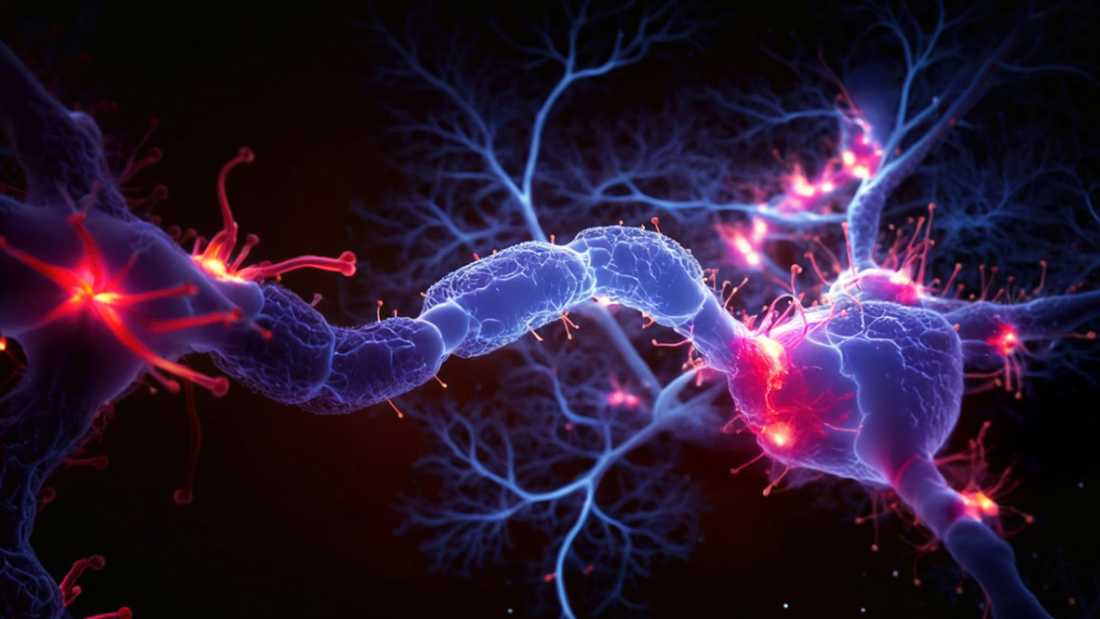
Multiple sclerosis, or MS, is an immune-mediated condition affecting the brain, spinal cord and optic nerves. The immune system damages myelin, the protective layer around nerve fibres. This disrupts communication between the brain and the rest of the body.
Symptoms vary between people and may change over time. They can include altered vision, fatigue, weakness, numbness, balance problems, muscle stiffness and changes in memory or concentration.
Disease-modifying therapies can reduce relapses and new inflammatory lesions in many people with MS. Rehabilitation, symptom management and healthy daily routines also have important roles. Researchers are studying umbilical cord-derived mesenchymal stromal cells, commonly called UC-MSCs, for their potential to regulate inflammation and support the nervous system.
How MS Damages the Nervous System
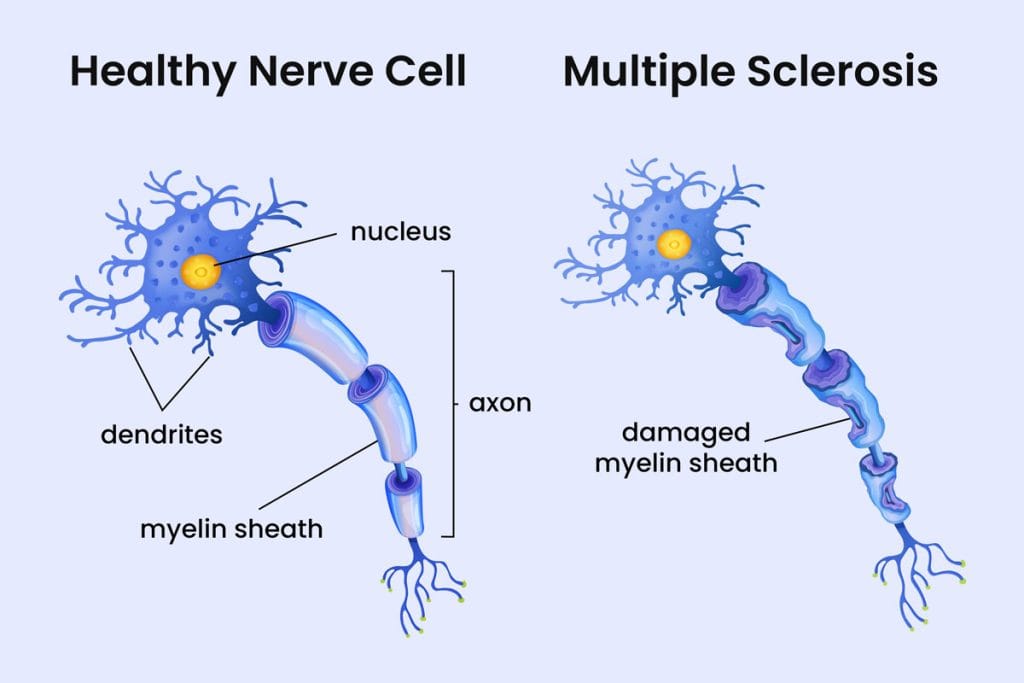
Myelin helps electrical signals travel efficiently along nerve fibres. In MS, immune cells enter the central nervous system and attack this protective layer. The resulting areas of inflammation and damage are known as lesions.
The body can repair some myelin, particularly earlier in the condition. Repeated inflammation may overwhelm this ability. Damage can then reach the underlying nerve fibre, or axon, and contribute to lasting disability.
Relapsing-remitting MS produces distinct episodes of new or worsening symptoms followed by periods of recovery. Progressive forms involve a gradual increase in disability, with or without relapses. The pattern of disease influences treatment decisions.
Care therefore has several aims. These include reducing inflammatory activity, protecting nerve fibres, maintaining function and helping the nervous system use its repair mechanisms.
Why Researchers Study UC-MSCs
UC-MSCs are collected from donated umbilical cord tissue after a healthy birth and with informed consent. Collection does not involve an embryo or interfere with the delivery.
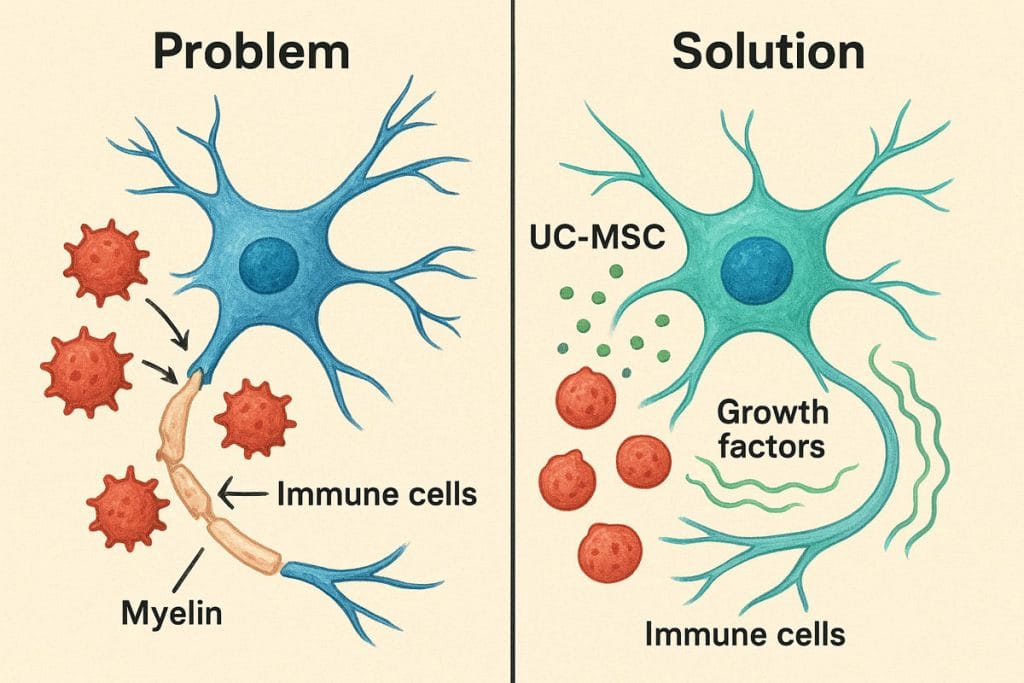
The cells can be expanded under controlled laboratory conditions. They release cytokines, growth factors and extracellular vesicles that may influence immune activity, cell survival and tissue repair.
UC-MSCs also tend to provoke a lower immune response than some other transplanted cells, allowing donor-derived treatment to be studied. This does not remove the need for donor screening, quality control and careful patient monitoring.
The main research interest lies in the signals the cells produce. UC-MSCs are not expected to replace large numbers of damaged nerve cells or rebuild myelin directly.
UC-MSC Therapy and AHSCT Are Different
UC-MSC therapy should not be confused with autologous haematopoietic stem cell transplantation, or AHSCT.
AHSCT uses a patient’s own blood-forming stem cells with chemotherapy. Its aim is to rebuild the immune system after treatment. It may be considered for selected people with highly active relapsing MS and carries significant risks that require specialist assessment.
UC-MSC treatment uses donor-derived stromal cells and does not follow the same chemotherapy-based process. Research focuses on immune regulation and support for nervous tissue. The evidence, treatment procedure and patient-selection criteria are different.
How UC-MSCs May Support People with MS
Researchers are studying two connected effects: regulation of the immune response and support for nerve-cell health.
Regulating Immune Activity
Several types of immune cell contribute to MS inflammation. These include T cells, B cells and macrophages. Regulatory T cells help prevent excessive immune activity.
Laboratory research suggests that MSC-derived signals can influence these cell populations and reduce inflammatory signalling. The goal is a more balanced immune response around the brain and spinal cord.
This effect is described as immunomodulation. It differs from removing immune function altogether. Clinical studies examine whether it can influence relapses, inflammatory lesions or the pace of disability.
Supporting Nerve Cells
Persistent inflammation creates a difficult environment for neurons and axons. UC-MSCs release neurotrophic factors associated with cell survival, blood-vessel support and communication between nerve cells.
These signals may help protect vulnerable tissue and support the nervous system’s own repair processes. Researchers are particularly interested in whether they can influence the cells responsible for producing myelin.
Remyelination in people with MS is complex. Laboratory findings offer a biological basis for further study, while clinical trials must show whether the effect is strong enough to improve function or slow disability.
What Clinical Research Measures
Early clinical studies of MSC-based treatment in MS have established practical information about administration and short-term tolerability under controlled conditions. Cell source, dose, delivery and follow-up differ between studies, so each protocol needs to be considered on its own terms.
Researchers assess disability using measures such as the Expanded Disability Status Scale. They may also track walking, hand function, vision, fatigue, cognition, bladder symptoms and quality of life. MRI scans can show new or active lesions and changes in brain volume.
Some studies have reported improvements or periods of stable disability in participants after MSC treatment. These signals have encouraged more controlled research. Larger trials and longer follow-up will clarify which outcomes are consistent, which patients are most likely to respond and how UC-MSC therapy may fit with existing MS care.
Interest in Progressive MS
Progressive MS remains an important focus because nerve damage can continue even when obvious relapses become less frequent. Available disease-modifying therapies may help some patients, but treatment choices are more limited than they are for active relapsing disease.
The immune-regulating and neuroprotective properties associated with MSCs address processes relevant to progression. Current research is examining whether those biological effects can help preserve function or improve symptoms in selected patients.
For someone living with progressive MS, stability can be a meaningful outcome. Maintaining walking ability, hand function, energy or independence may have a direct effect on daily life.
Building a Personalised MS Plan
MS treatment should begin with an accurate diagnosis and a review of disease activity. The medical team may consider symptoms, neurological examination, MRI findings, previous relapses, disability progression and current medication.
UC-MSC therapy is being explored as part of a broader care plan. It should not replace prescribed disease-modifying treatment without guidance from the neurologist responsible for the patient’s care.
Physiotherapy, occupational therapy, exercise adapted to ability, fatigue management and support for cognitive or emotional health can strengthen the plan. Clear baseline measurements also make it possible to judge any later change.
Discuss Your MS Care
A specialist review can connect your type of MS, treatment history and current goals with the available options. It also provides an opportunity to examine the proposed cell product, treatment protocol and follow-up plan.
Book a private consultation with our medical team to discuss your diagnosis, current MS treatment and regenerative approaches relevant to your clinical profile.