

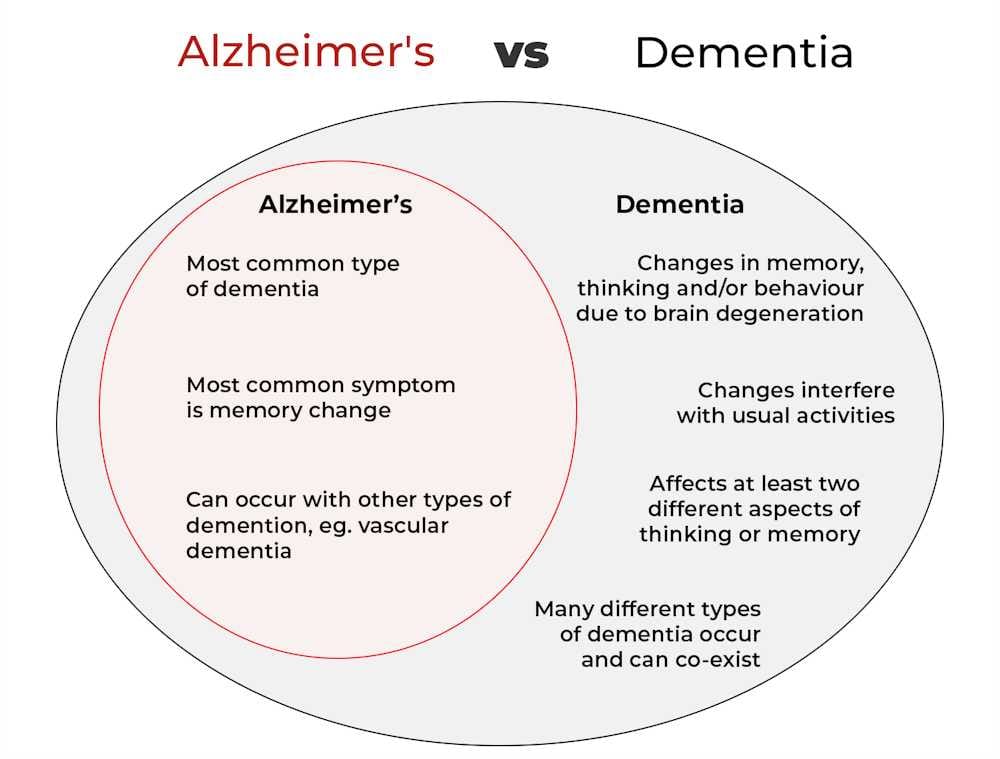
Dementia affects memory, thinking, communication and the ability to manage everyday life. It is a broad term covering several neurological conditions, including Alzheimer’s disease, vascular dementia, Lewy body dementia and frontotemporal dementia.
These conditions have different causes, but many involve progressive damage to neurons, loss of communication between brain cells and changes in the environment surrounding healthy brain tissue. Inflammation and abnormal immune activity are among the processes researchers are studying more closely.
This has created growing interest in regenerative medicine and the potential role of stem cells for dementia.
Mesenchymal Stem Cells, including Umbilical Cord-Derived Mesenchymal Stem Cells or UC-MSCs, are being studied for their ability to release biological signals associated with immune regulation, inflammation and neuronal support.
The research is focused on understanding whether these effects could help protect brain cells that are still functioning and support cognitive health for longer.
What Happens Inside the Brain in Dementia?
The brain contains billions of nerve cells connected through complex communication networks.
Different forms of dementia damage these networks in different ways.
Alzheimer’s disease provides one of the clearest examples and remains the most extensively studied form of dementia in stem cell research.
Amyloid Plaques
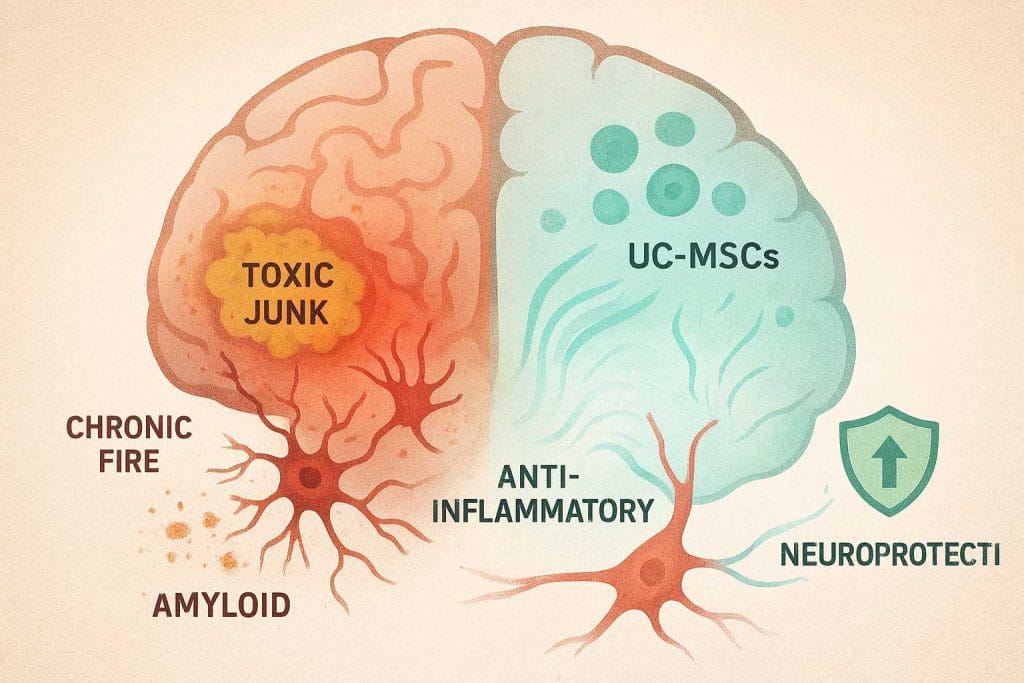
In Alzheimer’s disease, amyloid beta can accumulate between nerve cells and form plaques. These deposits are associated with disruption of normal brain function.
Tau Tangles
Tau normally helps maintain the structure of nerve cells. In Alzheimer’s, abnormal tau can form tangles inside neurons and interfere with their normal function. Other forms of dementia involve different patterns of damage, which is why an accurate diagnosis matters.
Why Brain Inflammation Matters
The brain contains specialised immune cells called microglia.
They help remove damaged material, respond to injury and maintain the environment around healthy nerve cells.
During some forms of dementia, immune activity can remain elevated for long periods. Persistent neuroinflammation may place additional stress on neurons that are already vulnerable.
The exact process differs between dementia types. Alzheimer’s is associated with amyloid, tau and changes in microglial activity, while vascular dementia has a stronger connection with blood vessel damage and impaired blood flow.
Researchers are studying whether regulating this inflammatory environment could help support brain cells that remain functional.
This is one of the areas where UC-MSC research has attracted attention.
What Are Umbilical Cord-Derived Mesenchymal Stem Cells?
UC-MSCs are mesenchymal stromal cells obtained from tissue associated with the umbilical cord, commonly Wharton’s jelly.
The tissue can be collected after birth following appropriate donor consent, screening and processing.
Researchers are interested in UC-MSCs because they release growth factors, cytokines, extracellular vesicles and other signalling molecules that can interact with immune cells and surrounding tissue.
In dementia research, the focus is mainly on these signalling effects and their possible role in supporting neurons that are still functioning.
The aim is to understand how the environment around vulnerable brain cells may be influenced as neurodegeneration progresses.
Why Researchers Are Studying UC-MSCs
Several characteristics have made UC-MSCs an active area of regenerative medicine research.
They Come From Young Tissue
Umbilical cord tissue is relatively young and has not undergone decades of ageing.
This gives researchers access to cells with useful growth and signalling characteristics for laboratory and clinical research.
They Can Influence Immune Activity
MSCs release molecules that communicate with different parts of the immune system.
Researchers are examining whether these signals can help regulate excessive inflammatory activity around damaged or vulnerable tissue.
This is relevant to dementia research because prolonged neuroinflammation is associated with several neurodegenerative processes.
They Release Neurotrophic Factors
MSCs can also release growth and signalling factors associated with neuronal survival and tissue support.
These substances may influence the environment surrounding neurons and the connections between brain cells.
Researchers have studied factors such as brain-derived neurotrophic factor, commonly called BDNF. Much of the evidence for these mechanisms still comes from preclinical research, so their clinical effect in people with dementia remains under investigation.
They Can Be Prepared From Screened Donors
UC-MSCs can be prepared from screened donor tissue and studied as an allogeneic therapy.
This allows researchers to work with more standardised cell preparations rather than collecting cells individually from every patient.
How Could UC-MSCs Support the Brain?
Researchers are examining several possible mechanisms.
One important area is immune regulation and the control of prolonged inflammatory activity.
When MSCs interact with an inflammatory environment, they can release signalling molecules that affect immune-cell behaviour. Researchers are studying whether this could create conditions that better support surviving neurons.
Another area is trophic support.
MSCs release substances associated with cell survival, tissue maintenance, blood vessel function and immune regulation. These signals may help vulnerable cells respond to biological stress.
Laboratory and animal research has also examined oxidative stress, synaptic function and abnormal protein accumulation. Alzheimer’s studies have paid particular attention to amyloid and tau.
These findings provide reasons for further study, but human clinical trials are needed to determine which effects can produce meaningful benefits for people with dementia.
Do Stem Cells Need to Become New Brain Cells?
Stem cell treatment for dementia does not depend on creating billions of replacement neurons.
Brain cells form complex networks that develop over many years, making direct replacement extremely difficult.
Much of the interest in MSCs comes from the biological substances they release.
These include signalling molecules, growth factors and extracellular vesicles that may influence neighbouring cells and immune responses.
This type of communication is often described as a paracrine effect.
For dementia research, supporting and protecting neurons that remain functional may therefore be an important therapeutic direction.
What About the Blood-Brain Barrier?
The blood-brain barrier regulates what can move from the bloodstream into brain tissue.
This makes delivery an important part of stem cell research for neurological conditions.
Researchers are studying how intravenously administered MSCs and the biological signals they release may influence processes within the nervous system. Some Alzheimer’s studies have also investigated more direct methods of administration.
The most appropriate delivery method, dose and treatment schedule have not yet been established for dementia.
These questions continue to be evaluated through clinical research.
What Have Human Studies Found So Far?
Human MSC research related to dementia has progressed furthest in Alzheimer’s disease.
Early clinical studies have mainly examined safety, tolerability, dosing and biological activity. Researchers have also looked for possible changes in cognitive function and everyday abilities.
These studies have provided information that supports continued investigation in larger and better-controlled trials.
Safety remains a major part of this research, and possible side effects are monitored carefully during clinical studies.
Human research for vascular dementia, Lewy body dementia and frontotemporal dementia is less developed, so results from Alzheimer’s studies cannot automatically be applied to every type of dementia.
An accurate diagnosis is therefore important when considering the relevance of stem cell research to an individual patient.
What Are Researchers Measuring?
Clinical studies look at both biological changes and outcomes that matter in everyday life.
Cognitive assessments can track memory, attention, language and other thinking abilities over time.
Functional assessments examine whether a person can continue managing normal activities and maintain independence.
Researchers may also study biomarkers found in blood, cerebrospinal fluid or brain imaging. Depending on the type of dementia, these can include inflammatory markers and signs of neurodegeneration.
Safety data are monitored throughout treatment and follow-up.
Together, these measurements help researchers determine whether a biological effect could translate into a meaningful difference for patients.
Where Does UC-MSC Therapy Stand Today?
Stem cell therapy for dementia remains an active area of clinical research.
Questions remain about the ideal dose, delivery method, treatment schedule, patient selection and long-term effects.
Research has already progressed into human studies, particularly for Alzheimer’s-related dementia. Scientists continue to investigate MSC-based treatments because of their potential effects on inflammation, immune regulation and neuronal support.
This provides a developing direction for regenerative neurology while larger trials continue to evaluate how much clinical benefit may be possible.
UC-MSC therapy has not been established as a cure for dementia. Regulatory status also differs between countries, so patients should understand both the available evidence and the regulations that apply where treatment is provided.
How Does This Fit With Existing Dementia Treatment?
Treatment for dementia depends on the condition causing it.
Some medicines can help manage cognitive and behavioural symptoms, depending on the diagnosis and stage of disease.
For selected patients with early Alzheimer’s disease, newer disease-modifying treatments that target amyloid have also become available.
UC-MSC research approaches dementia through additional biological pathways.
Researchers are studying inflammation, immune regulation and support for neurons that remain functional.
Future dementia care may involve different approaches depending on the underlying disease, stage of cognitive decline and individual patient profile.
A Reason for Careful Optimism
Dementia is complex and can result from several different neurological diseases.
This is why research into new biological approaches continues.
UC-MSCs give researchers another way to study inflammation, immune signalling and neuronal support. Human research, particularly in Alzheimer’s disease, has provided a foundation for continued clinical investigation.
For patients and families, meaningful progress could include maintaining cognitive function for longer, preserving independence and slowing further decline.
Continued clinical studies will help clarify which forms and stages of dementia may be most relevant to this approach and which patients may benefit.
Exploring Regenerative Options for Brain Health
Someone considering regenerative therapy for dementia should first have the underlying cause and stage of cognitive decline assessed carefully.
Different forms of dementia have different biological causes, and the available evidence for stem cell therapy is not the same for every diagnosis.
A specialist consultation can help review current treatment, medical history and available regenerative options while explaining which research may be relevant to the individual’s condition.
Schedule a Specialist Consultation
Speak with our medical team about your diagnosis, current treatment and regenerative therapies being studied for dementia and cognitive decline. Your doctor can review your individual situation and explain which options may be appropriate for you.