

Infertility can affect women, men or both partners. It may involve egg supply, sperm production, hormone function, damage to reproductive tissue or the ability of an embryo to implant in the uterus.
Treatments such as medication, surgery, intrauterine insemination and IVF have helped many people become parents. Results vary because every diagnosis has a different biological cause. Researchers are now studying regenerative medicine as another way to support damaged reproductive tissue and improve the conditions needed for conception.
One area of interest involves mesenchymal stromal cells, commonly called mesenchymal stem cells or MSCs, obtained from donated umbilical cord tissue.
Why Researchers Study Umbilical Cord MSCs
Umbilical cord tissue can be donated with informed consent after a healthy birth. Collection does not involve an embryo or interfere with the delivery.
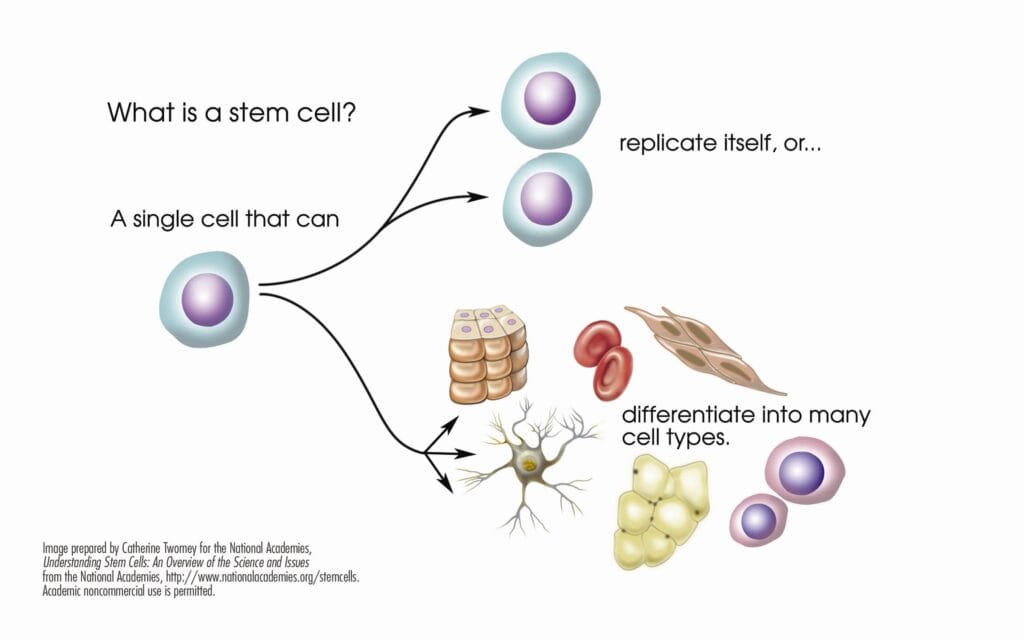
MSCs from this tissue can be expanded under controlled laboratory conditions. They release growth factors, cytokines and other signals that may regulate inflammation, encourage blood vessel formation and support tissue repair.
These cells tend to produce a lower immune response than some other transplanted cells, which makes donor-derived treatment possible to study. Their quality and suitability depend on donor screening, laboratory standards, cell preparation and the method of administration.
Researchers are interested mainly in the supportive signals produced by UC-MSCs. The aim is to create healthier conditions around a patient’s remaining reproductive cells and tissues.
Potential Uses in Female Fertility Care
Research involving women has concentrated on the ovaries and uterine lining. These tissues play different roles and require different treatment approaches.
Supporting Ovarian Function
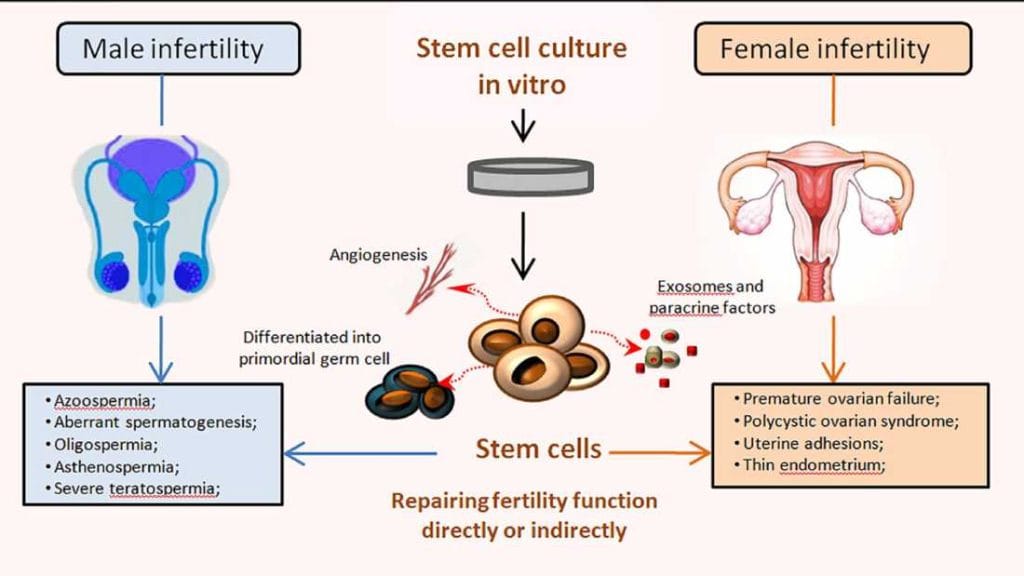
Premature ovarian insufficiency occurs when the ovaries lose normal function before the age of 40. A diminished ovarian reserve means fewer eggs remain or the ovaries respond less strongly to fertility medication.
UC-MSC research is examining whether cell-derived signals can reduce inflammation, support blood flow and protect the follicles that remain. The goal is to help ovarian tissue function as well as possible. This approach does not assume that MSCs will create a new supply of eggs.
Early studies have reported changes in hormone levels, menstrual activity and follicle development in some participants. A small number of pregnancies have also been reported. These findings have helped researchers identify which patients and biological markers should be studied in larger trials.
Repairing the Uterine Lining
An embryo needs a receptive endometrium, or uterine lining, to implant. Scarring associated with Asherman’s syndrome and a persistently thin endometrium can make implantation more difficult.
Researchers are studying whether UC-MSCs can support the repair of damaged endometrial tissue. The signals released by the cells may encourage new blood vessels and tissue growth, which could improve endometrial thickness and receptivity.
Small human studies involving damaged or thin endometrium have reported improvements in lining thickness. Pregnancies and live births have occurred in some study participants after assisted reproductive treatment. These results provide a useful foundation for larger controlled studies and more consistent treatment protocols.
Developing Eggs in the Laboratory
Scientists are investigating how stem cells develop into reproductive cells. Producing a mature egg that can be used safely would require precise control of cell development and confirmation that its genetic material functions normally.
This research could one day expand fertility options for people who no longer produce viable eggs. Current work is focused on understanding the biology and establishing the safety standards needed before clinical use can be considered.
Potential Uses in Male Fertility Care
Male infertility may involve a low sperm count, poor sperm function or no measurable sperm in the ejaculate. In non-obstructive azoospermia, the testes produce little or no sperm because sperm formation is impaired.
Researchers are examining whether UC-MSCs can improve the tissue environment within the testes by influencing inflammation, blood supply and cellular repair. A healthier environment may support any sperm-producing cells that remain.
Most evidence in this area comes from laboratory and animal research. A few early human studies have explored safety and changes in sperm production. The findings are guiding the design of more detailed trials, including decisions about patient selection, dose and delivery.
How Clinical Progress Is Assessed
Fertility research must measure more than a change in laboratory results. Researchers follow a sequence of outcomes to understand the clinical value of treatment.
For ovarian studies, these measures may include hormone levels, menstrual activity, antral follicle count, egg retrieval and pregnancy outcomes. Endometrial studies may assess tissue thickness, blood flow, implantation, pregnancy and live birth. Male fertility studies may track sperm concentration, movement, shape and the possibility of retrieving sperm for assisted reproduction.
Long-term follow-up is also part of responsible fertility research. It allows clinicians to monitor the health of treated patients, pregnancies and children born after treatment.
A Personalised Path Through Fertility Treatment
Regenerative medicine may add new options for people with damaged reproductive tissue or a limited response to standard fertility treatment. Its most appropriate role will depend on the diagnosis, the remaining ovarian or testicular function and the quality of the available clinical evidence.
UC-MSC treatment should be considered within a complete fertility assessment. This may include hormone testing, ultrasound, semen analysis, evaluation of the uterine cavity and a review of previous treatment. Established options such as IVF may remain part of the plan.
The field continues to move forward as researchers refine cell preparation, delivery and patient selection. For prospective patients, the most useful first step is a medical review that connects the research with their specific diagnosis.

Discuss Your Fertility Options
If you have experienced a low ovarian reserve, premature ovarian insufficiency, a thin or damaged endometrium, male-factor infertility or unsuccessful fertility treatment, our medical team can review your history and explain the options relevant to you.
Book a private consultation with our specialist to discuss suitable assessments, established fertility care and regenerative approaches supported by your clinical profile.