
Dermatomyositis (DM) is a rare autoimmune disease that can affect both the muscles and the skin. The immune system mistakenly attacks the body’s own tissues, leading to progressive muscle weakness and characteristic skin rashes. For some patients, even everyday activities such as standing from a chair, climbing stairs, or lifting the arms can become difficult.
Treatment usually focuses on controlling the abnormal immune response and reducing inflammation. While these treatments can be effective, long-term immune suppression can also bring unwanted side effects. This has led researchers to investigate regenerative approaches that may help regulate the immune system rather than suppressing it broadly.
One area of interest is the use of Umbilical Cord-Derived Mesenchymal Stem Cells (UC-MSCs). These cells are being studied for their ability to influence immune activity, reduce inflammatory signalling, and support the body’s natural repair processes.
Understanding Dermatomyositis
Dermatomyositis is an autoimmune condition in which the immune system remains active against healthy tissue. One of the main targets appears to involve the small blood vessels supplying muscles and skin, contributing to the characteristic symptoms of the disease.
The muscle involvement commonly causes weakness in areas close to the torso. Patients may find it difficult to stand from a seated position, raise their arms, or perform other movements that were previously routine.
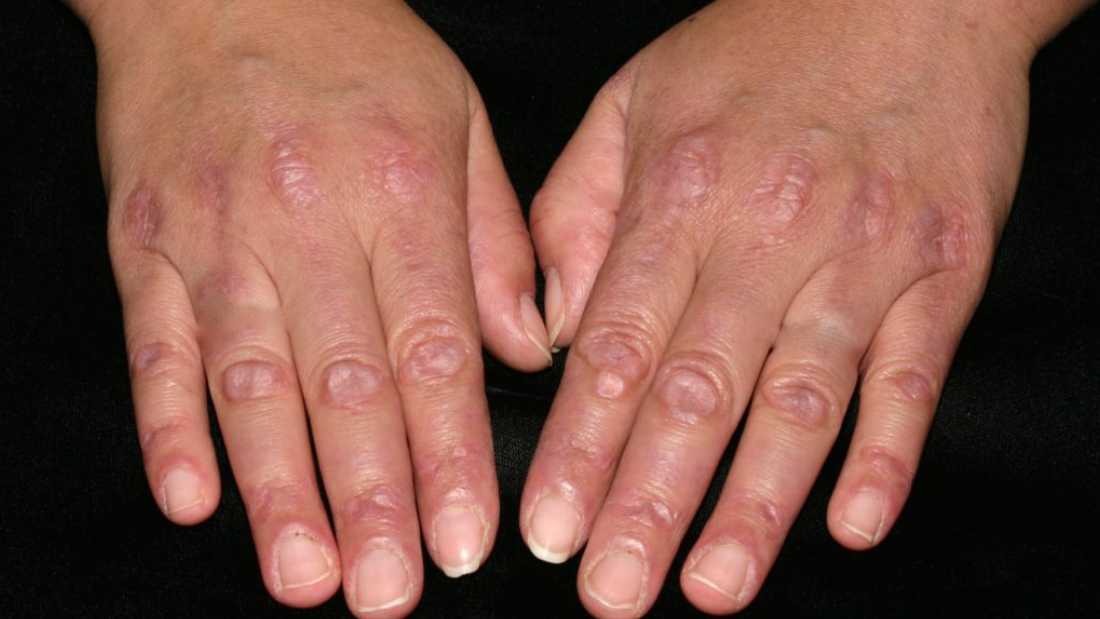
The skin can develop distinctive inflammatory rashes. These may include a purplish rash around the eyelids, known as a heliotrope rash, and raised changes over the knuckles called Gottron’s papules.
Because the disease involves both immune dysfunction and ongoing inflammation, researchers are interested in therapies that can influence several of these processes at the same time.
Why Are Researchers Studying UC-MSCs?
Mesenchymal Stem Cells have attracted attention in autoimmune disease research because of their ability to interact with immune cells and influence inflammatory pathways.
UC-MSCs are obtained from umbilical cord tissue, commonly from Wharton’s jelly. The tissue can be collected after birth following appropriate consent and donor screening. Researchers are interested in these cells because they can release a range of signalling molecules that interact with the immune system.
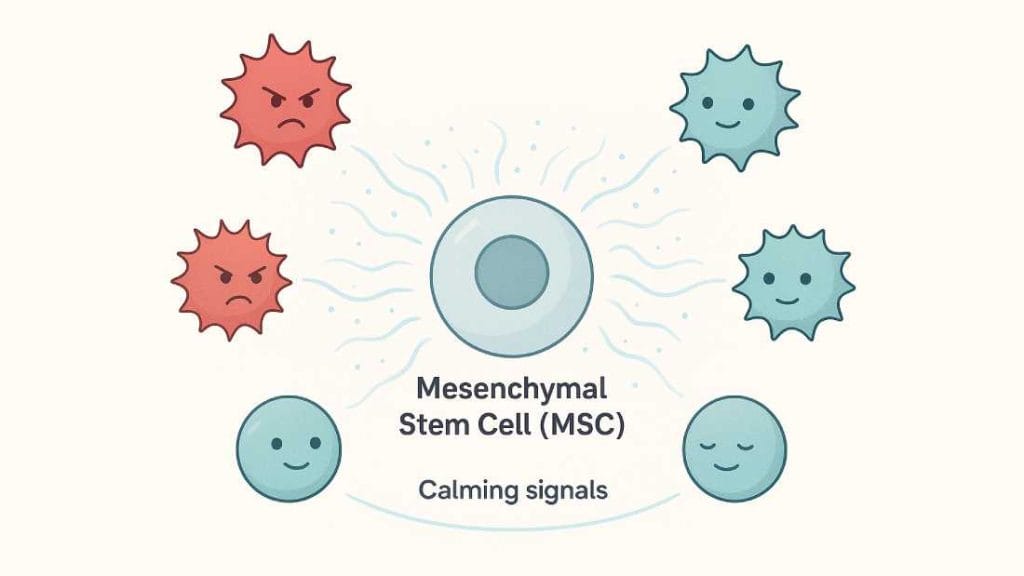
Rather than expecting the cells to replace damaged muscle directly, much of the research focuses on their immunomodulatory effect. The idea is that UC-MSCs may help shift an overactive immune response towards a more regulated state.
How Could UC-MSCs Work in Dermatomyositis?
Research is focused on several possible mechanisms. They can be grouped into three connected areas:
- Immune regulation: UC-MSCs can release signals that influence immune cells, including T-cells and B-cells. Researchers are also studying their potential to support regulatory T-cells, which help keep immune responses under control. This could be relevant in an autoimmune disease where the immune system is attacking the body’s own tissues.
- Inflammation control: By influencing immune signalling, MSCs may help reduce the inflammatory environment associated with dermatomyositis. Researchers may monitor changes in symptoms as well as laboratory markers such as creatine kinase (CK), which can indicate muscle injury.
- Tissue support: UC-MSCs also release growth factors and other biological signals involved in cell survival and tissue repair. Preclinical research has investigated their potential effects on muscle damage and fibrosis. However, these findings still need to be confirmed through larger human studies.
The important point is that UC-MSCs are being studied primarily as biological regulators. Their potential does not depend on simply becoming new muscle cells.
What Does the Clinical Evidence Show?
Stem cell therapy for dermatomyositis remains an investigational area. Early research has mainly involved small clinical studies, including studies using UC-MSCs or related cells derived from umbilical cord tissue.
Researchers have reported clinical signals that warrant further investigation, including changes in muscle strength measurements and reductions in creatine kinase levels in some studies. These findings are relevant because muscle strength and CK levels provide measurable ways to evaluate disease activity and muscle injury.
At the same time, the number of patients studied remains limited. Larger and better-controlled clinical trials are needed to determine how consistently UC-MSC therapy can help people with dermatomyositis, which patients may benefit most, and how long any improvements may last.
This is an area where careful optimism is appropriate. The research provides a reason to continue studying UC-MSCs, while the clinical evidence is still developing.
A New Direction for Autoimmune Disease Research
For people living with dermatomyositis, controlling the immune response is an important part of protecting muscle function and managing inflammation.
UC-MSC research approaches this problem from a different biological direction. Instead of relying only on broad immune suppression, researchers are investigating whether these cells can help regulate immune activity while also providing signals associated with tissue protection and repair.
The potential is particularly relevant for patients whose disease remains difficult to control with conventional treatment. However, regenerative therapy should be considered alongside established medical care, not as a replacement for treatment prescribed by a specialist.
Considering Regenerative Therapy for Dermatomyositis
Anyone considering stem cell therapy for dermatomyositis should first have their diagnosis, disease activity, current medications, muscle function, and overall health reviewed by a qualified specialist.
The type and severity of autoimmune disease can vary considerably between patients. A medical evaluation can help determine which established treatments remain appropriate and whether a regenerative approach being studied for dermatomyositis may be relevant to the individual case.
Schedule a Specialist Consultation
Speak with our medical team about your diagnosis, current treatment, and the regenerative therapies being studied for autoimmune and inflammatory conditions.