

Systemic Lupus Erythematosus (SLE), commonly known as lupus, is a complex autoimmune disease in which the immune system mistakenly attacks the body’s own healthy tissues. It can affect different parts of the body, including the skin, joints, blood, and kidneys. Because lupus can behave differently from one person to another, treatment often needs to be adjusted according to the organs involved and the activity of the disease.
Current treatment relies on medicines that control inflammation and suppress excessive immune activity. These treatments can be essential for preventing organ damage, but long-term use may also bring significant side effects. This has encouraged researchers to investigate regenerative approaches that could help regulate the underlying immune dysfunction.
One area receiving attention is Umbilical Cord-Derived Mesenchymal Stem Cells (UC-MSCs). Rather than replacing damaged organs directly, these cells are being studied for their ability to influence immune cells and inflammatory pathways.
Why Are UC-MSCs Being Studied for Lupus?
UC-MSCs are mesenchymal stromal cells obtained from umbilical cord tissue, commonly from Wharton’s jelly. They can be collected after birth following appropriate donor screening and consent.
Researchers are interested in UC-MSCs because they release a range of biological signals that can interact with the immune system. Their potential use in lupus is therefore closely connected with immunomodulation, meaning the ability to influence an abnormal immune response and encourage greater immune balance.
The source article highlights two characteristics that have made UC-MSCs particularly interesting for autoimmune research. They can be used as allogeneic cells from screened donors, and their relatively young cellular characteristics may provide strong signalling activity.

How Could UC-MSCs Influence Lupus?
Lupus involves several parts of the immune system, so researchers are studying more than one mechanism.
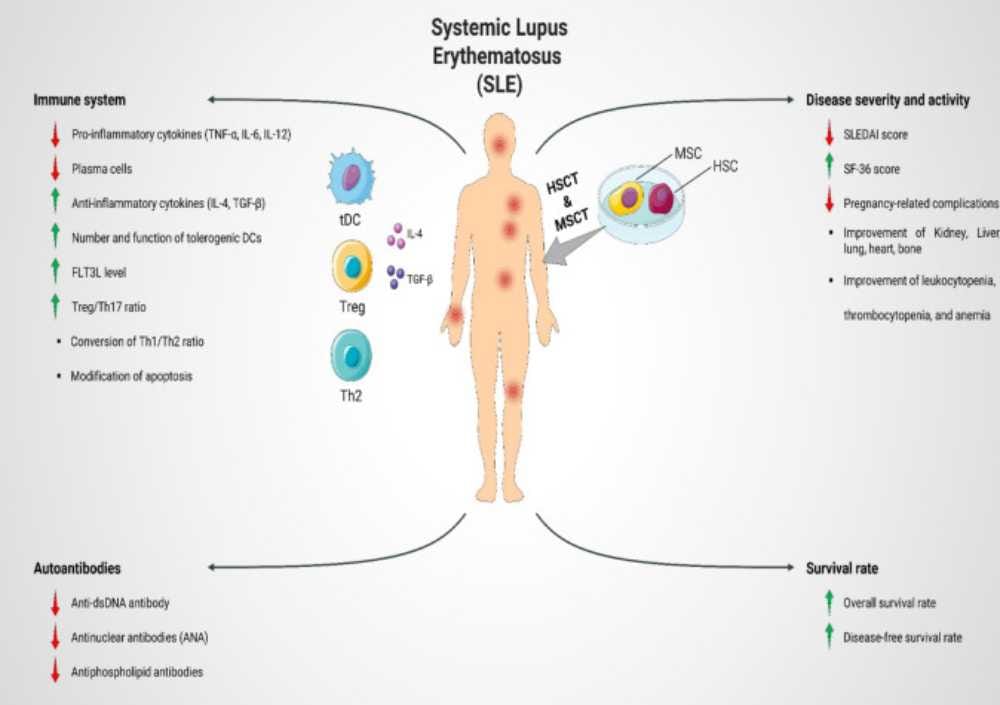
- Regulating immune activity: Certain T-cells and B-cells can become overactive in lupus and contribute to the production of autoantibodies that attack the body’s own tissues. UC-MSCs can release signalling molecules, including IDO, that influence the activity and proliferation of immune cells. Researchers are also studying their effects on Regulatory T-cells, or Tregs, which help keep immune responses under control.
- Reducing inflammation: By influencing immune signalling, UC-MSCs may help reduce excessive inflammatory activity. This is important because persistent inflammation contributes to tissue and organ damage in lupus.
- Supporting damaged tissue: Lupus can affect major organs, particularly the kidneys in cases of lupus nephritis. MSC research has examined anti-inflammatory and tissue-supporting effects that may help protect existing cells and create a more favourable environment for repair.
These mechanisms are part of the reason UC-MSC therapy is being investigated as a potential approach for patients with difficult-to-control autoimmune disease.
What Does the Clinical Research Show?
Human studies of MSC therapy for lupus have already been conducted, particularly in patients with severe or treatment-resistant disease. Research has investigated allogeneic UC-MSCs as an alternative approach to using the patient’s own cells, since autoimmune disease can affect the function of a patient’s own bone marrow-derived MSCs.
Early clinical research has reported several findings of interest, including changes in disease activity scores, autoantibody levels, complement proteins, and kidney-related measurements in some patients. Studies involving lupus nephritis have also reported reductions in proteinuria and improvements in certain measures of kidney function.
These results provide a reason for continued research, particularly for patients whose disease remains difficult to control with conventional treatment. At the same time, many of the studies have involved relatively small numbers of patients, so larger controlled trials are needed to establish how consistently these benefits occur and how long they may last.
What About Lupus Nephritis?
Kidney involvement is one of the more serious complications of lupus. Lupus nephritis occurs when the immune system causes inflammation and damage within the kidneys, potentially affecting their ability to filter waste and maintain normal fluid balance.
This is one area where MSC research has attracted particular interest. Early studies have reported reductions in proteinuria and improvements in some measures of renal function following MSC treatment.
These findings are encouraging, but kidney disease requires careful medical monitoring. UC-MSC therapy should therefore be considered within a broader treatment plan supervised by specialists who can assess kidney function, disease activity, medications, and other risk factors.
Where Does Stem Cell Therapy for Lupus Stand Today?
Stem cell therapy for lupus remains an area of clinical research. The available studies provide encouraging signals around immune regulation, disease activity, and organ involvement, but they do not yet establish UC-MSC therapy as a proven cure for lupus.
Researchers are continuing to study important questions such as which patients are most likely to benefit, the appropriate cell dose, treatment schedule, delivery method, and long-term safety.
This is a developing field, but it has already moved beyond laboratory research into human clinical studies. That gives patients and doctors more information to work with while researchers continue to determine where MSC therapy may fit within future lupus treatment.
A New Direction in Autoimmune Disease Research
Lupus is driven by a complicated interaction between immune cells, inflammation, genetics, and environmental factors. Because of this complexity, there may not be one treatment that works in the same way for every patient.
UC-MSC research offers another way to approach the disease by studying immune regulation alongside tissue protection and repair. The goal is to understand whether these biological effects can translate into meaningful improvements in disease control and organ function.
For patients living with severe or treatment-resistant lupus, continued research in this area provides a reason for hope. The focus now is on turning promising biological findings into reliable clinical evidence.
Considering Regenerative Therapy for Lupus
Anyone considering stem cell therapy for lupus should first have their diagnosis, disease activity, affected organs, current medications, and overall health reviewed by a qualified specialist.
Lupus can vary considerably between patients. A person with mainly skin and joint symptoms may require a very different treatment approach from someone with kidney or other organ involvement. A specialist can review the individual situation and explain which established treatments remain appropriate, whether a regenerative approach may be relevant, and what evidence currently supports it.
Ready to Explore the Future of Lupus Treatment?
If you or a loved one is inspired by the potential of regenerative treatments, the most critical next step is taking informed action with trusted specialists.
Schedule a Consultation with Our Experts: Discuss your diagnosis, current treatment, and the regenerative therapies being studied for lupus with our medical team.