
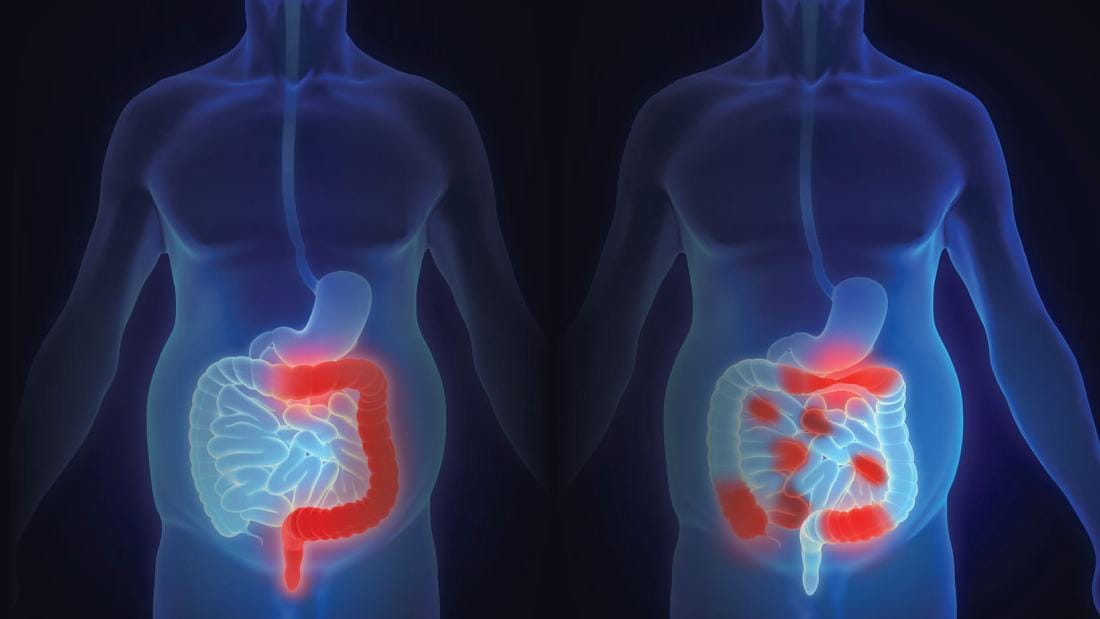
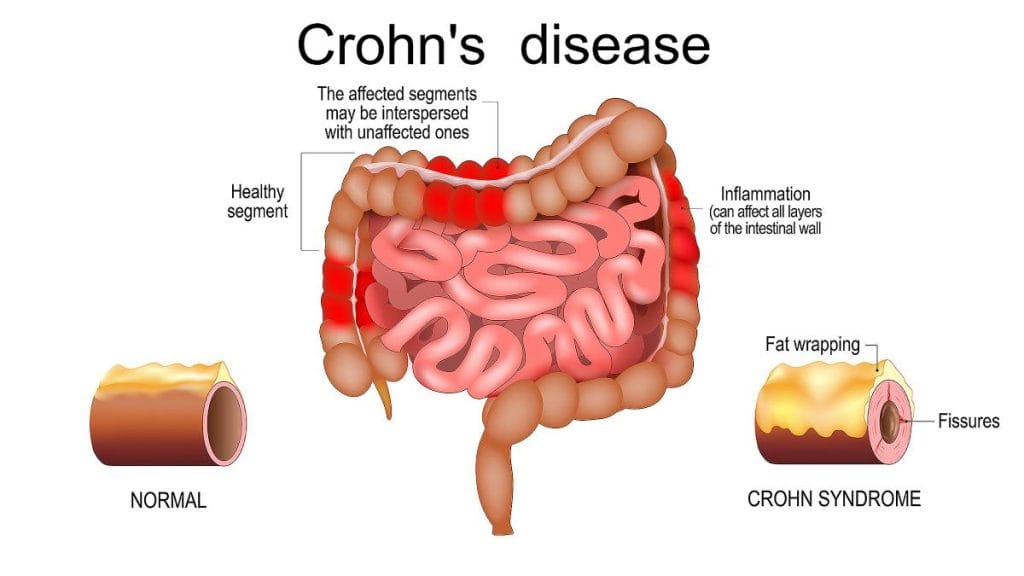
Crohn’s disease is a chronic inflammatory disease that can affect different parts of the digestive tract. It develops when the immune system becomes abnormally active and causes ongoing inflammation in the intestinal tissue. Over time, this inflammation can lead to painful ulcers, fatigue, nutritional problems and complications such as fistulas and strictures.
Current treatment focuses on controlling inflammation and keeping the disease in remission. Steroids, biologic medicines and other immune-modulating treatments can provide important benefits, but some patients do not respond adequately or continue to experience complications despite treatment. These limitations have encouraged researchers to explore regenerative approaches that may address both the inflammatory process and the physical damage caused by Crohn’s disease.
One area receiving particular attention is Mesenchymal Stem Cell (MSC) therapy, including Umbilical Cord-Derived Mesenchymal Stem Cells (UC-MSCs).
Understanding the Damage Caused by Crohn’s Disease
Crohn’s disease can affect the intestinal wall in several ways. Persistent inflammation creates an environment in which the tissue has difficulty healing properly. As the disease becomes more active, inflammation can develop into deep ulcers that extend through several layers of the intestinal wall.
In more advanced cases, this damage can contribute to fistulas, which are abnormal passages that form between the intestine and another part of the body. Crohn’s disease can also cause strictures, where repeated inflammation and scarring narrow part of the intestine and may interfere with the normal movement of food.
These complications can be particularly difficult to manage because controlling inflammation does not always mean that existing structural damage will immediately disappear.
Why Are Umbilical Cord Stem Cells Being Studied?
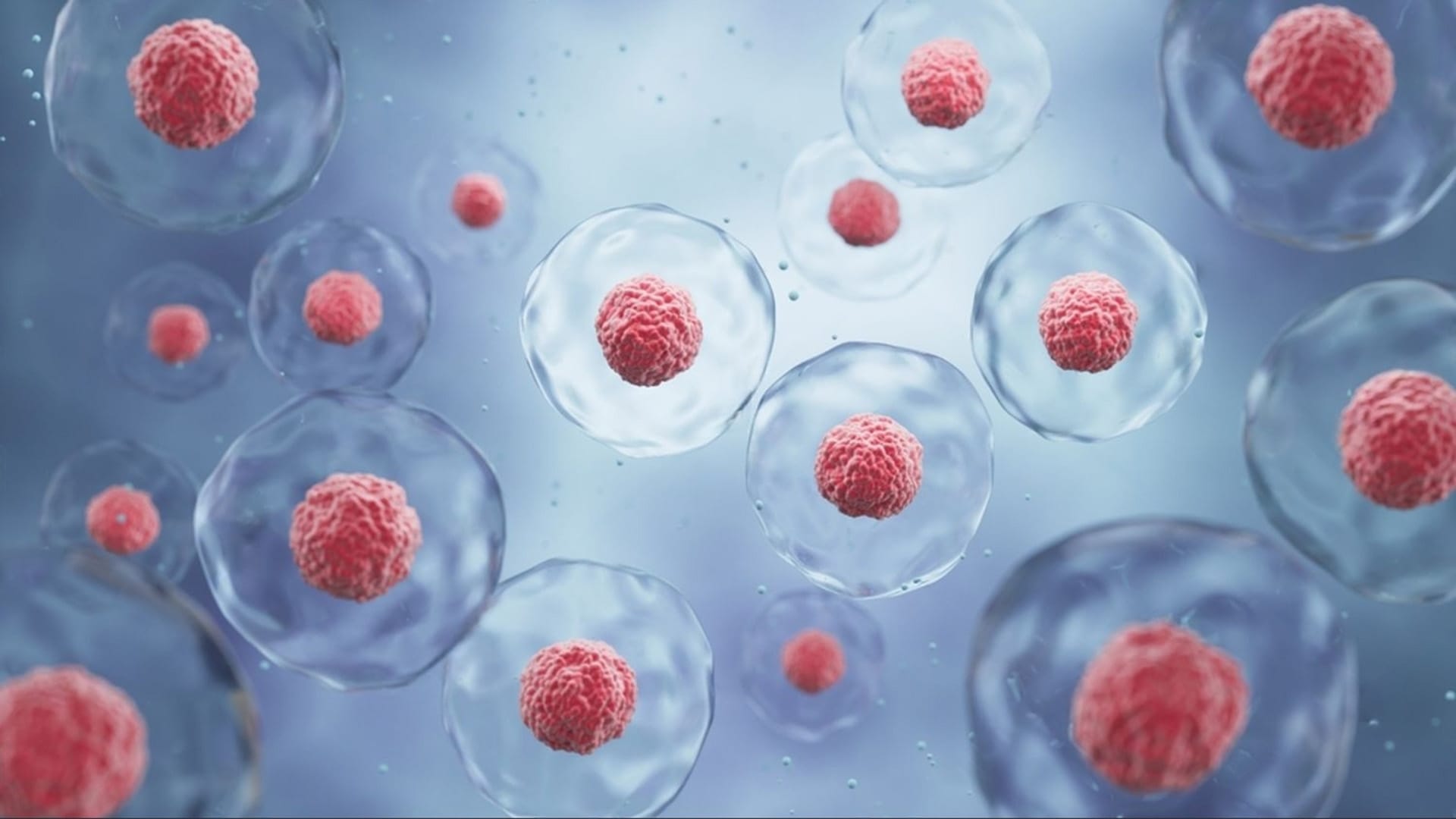
UC-MSCs are obtained from umbilical cord tissue, commonly from Wharton’s jelly. The tissue can be collected after birth following appropriate donor consent and screening.
Researchers are interested in these cells because they can release a range of biological signals that interact with immune cells and surrounding tissue. Their potential use in Crohn’s disease is therefore closely related to immunomodulation, inflammation control and support for tissue repair.
The source article highlights several characteristics that have made UC-MSCs interesting for regenerative medicine, including their relatively young cellular characteristics, their availability from screened donors, and their potential for allogeneic use.
How Could UC-MSCs Support Crohn’s Disease?
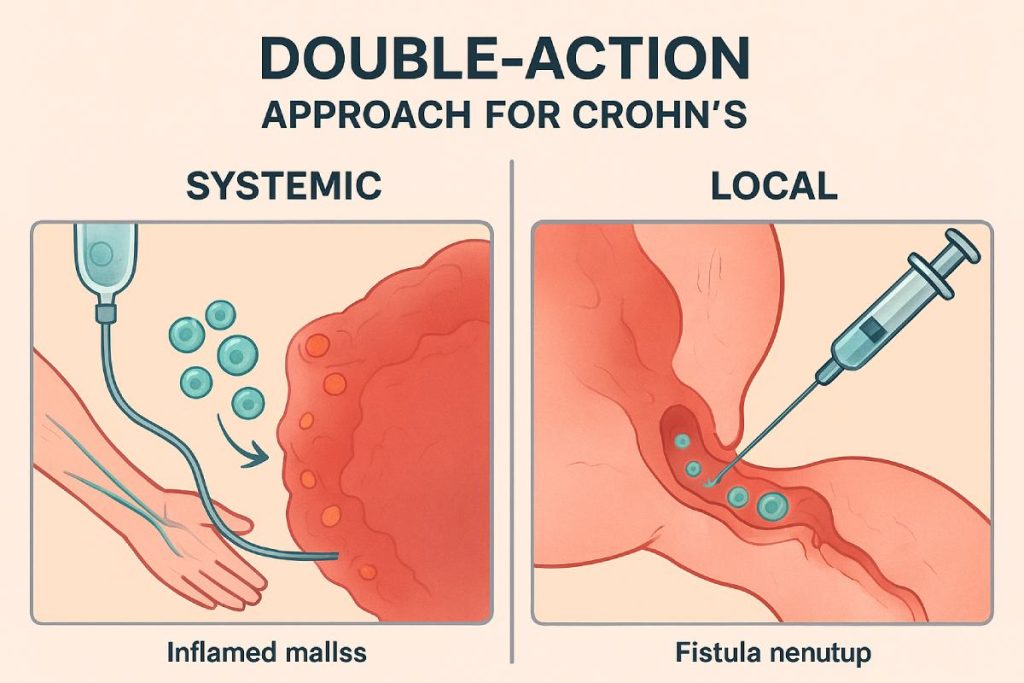
Research is exploring two main ways MSC therapy could potentially address different aspects of Crohn’s disease:
Regulating inflammation and supporting tissue repair: When MSCs are administered systemically, researchers study their interaction with the immune system and inflammatory environment. MSCs can release signalling molecules that influence immune-cell activity, including pathways involving Regulatory T-cells. The aim is to create a less inflammatory environment that may allow damaged intestinal tissue to recover more effectively. For fistulas, researchers have also studied a more targeted approach in which MSCs are injected directly around the fistula tract. The cells may influence local inflammation and release growth factors that support the body’s own repair processes. Research has also examined their potential role in supporting new tissue and blood-vessel formation around damaged areas.
This distinction is important. The potential role of MSCs is not simply to become new intestinal tissue. Much of the research focuses on the signals these cells produce and how those signals may influence inflammation and healing.
What Does the Clinical Research Show?
Human clinical research into stem cell therapy for Crohn’s disease has already been conducted, including studies involving patients whose disease has been difficult to control with conventional treatments. Research has examined outcomes such as disease activity, clinical remission, endoscopic healing and fistula closure.
The results have provided encouraging signals. Some studies have reported improvements in disease activity and healing of intestinal ulcers, while research into local MSC treatment for complex perianal fistulas has also reported meaningful rates of fistula closure.
However, the evidence needs to be interpreted carefully. Results can differ depending on the type of MSC used, how the cells are administered, the characteristics of the patients, and the severity of the disease. The source also describes stem cell therapy for Crohn’s as an experimental treatment, so further clinical research is needed to establish which approaches provide consistent and lasting benefits.
What Makes Fistula Treatment Particularly Interesting?
Fistulas are among the more difficult complications of Crohn’s disease. Medication can help control the underlying inflammation, but a fistula is also a physical tract within damaged tissue.
This is why local MSC therapy has attracted attention. By placing cells directly around the affected area, researchers can study whether their anti-inflammatory and tissue-supporting signals can help the body close the fistula.
Clinical research has reported fistula closure in a proportion of treated patients, including patients with complex perianal fistulas. These findings have made local MSC therapy an important area of regenerative medicine research for Crohn’s disease.
The goal is not to promise that every fistula will heal. The goal is to understand which patients and which types of fistulas are most likely to respond.
Where Does Stem Cell Therapy for Crohn’s Disease Stand Today?
Stem cell therapy for Crohn’s disease has progressed into human clinical research, with particular interest in patients who have difficult-to-treat disease and complex fistulas.
Researchers are still studying the most appropriate cell source, dose, delivery method, treatment schedule and patient selection. Long-term outcomes are also important because Crohn’s disease can change over time.
This makes the field promising, but it is still developing. Patients should view UC-MSC therapy as a regenerative approach under clinical investigation rather than as an established cure for Crohn’s disease.
At the same time, the research provides a meaningful reason to continue exploring the treatment. The possibility of influencing inflammation while supporting the body’s own tissue-repair processes could become an important part of future Crohn’s disease care.
A New Direction for Crohn’s Disease Research
Crohn’s disease involves both an abnormal immune response and physical damage to intestinal tissue. This makes regenerative medicine particularly interesting because researchers are investigating approaches that address both aspects of the disease.
UC-MSC research focuses on immune regulation, inflammatory control and tissue support. For patients with complications such as fistulas, local delivery is being studied as a way to concentrate these biological effects around damaged tissue.
The research is still developing, but clinical studies have already provided valuable information about how MSC-based approaches may be used in people with Crohn’s disease.
Considering Regenerative Therapy for Crohn’s Disease
Anyone considering stem cell therapy for Crohn’s disease should first have their diagnosis, disease activity, previous treatments, intestinal complications and overall health reviewed by a qualified specialist.
Crohn’s disease can vary considerably between patients. Someone with active intestinal inflammation may have very different treatment needs from someone whose main complication is a complex fistula. A specialist can review the individual situation and explain the established treatment options, the role of regenerative medicine, and the level of clinical evidence supporting each approach.
Ready to Explore Advanced Crohn’s Disease Therapies?
If you or a loved one is inspired by the potential of regenerative medicine for IBD, the most crucial next step is to consult with trusted medical specialists who are experts in this field.
Schedule a Specialist Consultation: Do not make a medical decision based on articles alone. Speak directly our doctor who is knowledgeable about regenerative therapies. Our experts can review your diagnosis and discuss your full range of options.